

Building Short Exercises
A meta-exercise for exercise builders
Setup
Gather, read this – we'll move on in less than 5 mins
In this, we'll seek insights around how we build short interactive learning experiences. We'll split our time and attention roughly equally between making something, and sharing what we've made. You can work on something you've made, something you've experienced, or spectate.
While we're gathering, we'll exchange:
What's short?
Work
under 10 minutes. Alone or in pairs. Aiming to put text on the Miro board describing the exercise's activity, goal and more.
There are four paths through the next piece of work, depending on whether you've got an exercise in mind, whether you built it, and whether you want a guide. Open one of the choices below...
if you have made an exercise and want a guide to working on it...
Structured Path
In this, you'll follow a sequence that has (sometimes) worked for me. You'll work fast – breadth being more important than depth.
Even fast, we may not have enough time to do all this – if you're going over time, finish two. You can always come back to this another time if interested.
Note a fundamental choice – 1 min
Why short? Rather than longer...
Why an interactive exercise? Rather than a poem or a lecture or a graph or a cartoon or whatever?
Describe your goal in bringing people together. Write something on how your goal might be reached with a short exercise, how your goal might be reached with an interactive exercise, and how that might be done coherently.
Constraints and necessities – 1 min
Do you need a computer? An IDE? Do you need to be outdoors? Do you need to be familiar with something?
Does this need to be an interactive exercise?
Does it need to be short?
Does your choice of a short interactive exercise work with the topic, or is there some strain?
Write a sentence on how you'll need to prepare to let your exercise be short exercise, and another show you'll need to prepare to let your exercise be interactive.
Participant activity – 2 mins
Describe the actions your participants will take, and the time they'll spend.
Get stuff to stick – 1 min
What proportion of your short timebox will you use? Do you have a common pattern of interaction that you use?
Describe the actions you and the participants will take to review and absorb the ideas that have turned up.
Review what you've written – 1 mins
Re-read, looking for things that need to be changed: coherence, ordering, supporting, time given.
Make changes
if you have made an exercise and do not want a guide...
Unstructured Path
Take 5 minutes to write / re-read / edit / tidy up a description of a short interactive exercise – try to give yourself a good chance of feeling done in 5.
You'll describe participant activity and your goal, and what you've done to make your exercise both short and interactive.
Write wherever you like, make sure it gets on to the Miro board
if you have experienced a good exercise, but haven't got one to bring...
Descriptive Path
Have you enjoyed a short interactive exercise? What do you remember about it? Write down the apparent goal, the activities that participants did, and more – especially around what enabled it to be short, and how interactivity worked.
Take 5 minutes to write / re-read / edit / tidy up your description – try to give yourself a good chance of feeling done in 5.
Write wherever you like, make sure it gets on to the Miro board
if you prefer to see what others are doing rather than writing something...
Observer's Path
Have a think about what works about a short interactive exercise, and what doesn't. Do you have principles? Do you have examples?
Why might someone want to build a short interactive exercise?
Why might someone want to participate in a short interactive exercise?
No need to write. If you're happy to share your opinions, let me know.
Share
5 minutes collective, going round and hearing exercises
Give a swift spoken summary of your activity and goal, and what you've done to make the exercise both short and interactive.
We'll cut the time to suit the exercises available – more content means less time, and if there are many exercises we'll follow the hover.
Keep track of your reactions – confirmations, lightbulb moments, points of resistance
Reflect
5 minutes to exchange
To talk about things that
- confirmed what you already knew
- restructured your thoughts
- surprised you
- challenged you
Sources
I recall Jerry Weinberg's workshop and use his book series on interactive exercises.
I use the Liberating Structures app to give me ideas for interactions and wrapups.
 Keith McCandless, Henri Lipmanowicz
Lisa Crispin reminded me to include:
 Sharon L. Bowman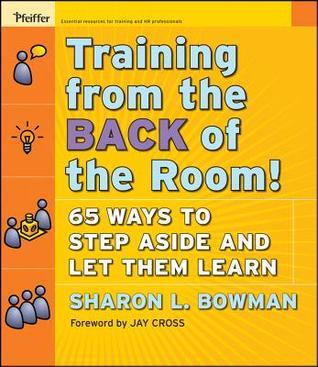
Extension
This extends the structured path above.
Why are you doing this?
Be clear with yourself: are you leaning towards sending out information, giving people a learning experience, or something else?
Illustrative Examples
If I'm sending out information, perhaps I will be...
- looking for an activity to fit the learning objectives I have in mind
- putting information into people's brains
- demonstrating / repeating / practicing a skill
- checking their learning against something authoritative
If I'm interested in giving people a learning experience, perhaps I will be...
- doing an activity and looking for learning points to emerge
- giving an experience
- opening people's brains to change / reframing
- seeing what they have discovered collectively
If I'm interested in something else, perhaps I will be...
- exploring ideas alongside the participants
- trying out something I've made before
- aiming primarily to entertain
There are hybrids, of course. I very often find myself experiencing something, thinking that I've learned from it, recognising that I've learned something that is usefully teachable to my peers, then setting up and refining somehow-similar experiences.
Here's a story about one such occasion.
 James Lyndsay



Comments
Sign in or become a Workroom Productions member to read and leave comments.